
Dell XPS 14 (2026) vs Dell XPS 13 (9350)
Intel Core Ultra X9 388H against Intel Core Ultra 9 288V, 14-inch vs 13.4-inch screens, 1.36 vs 1.18 kg. Every spec side by side.
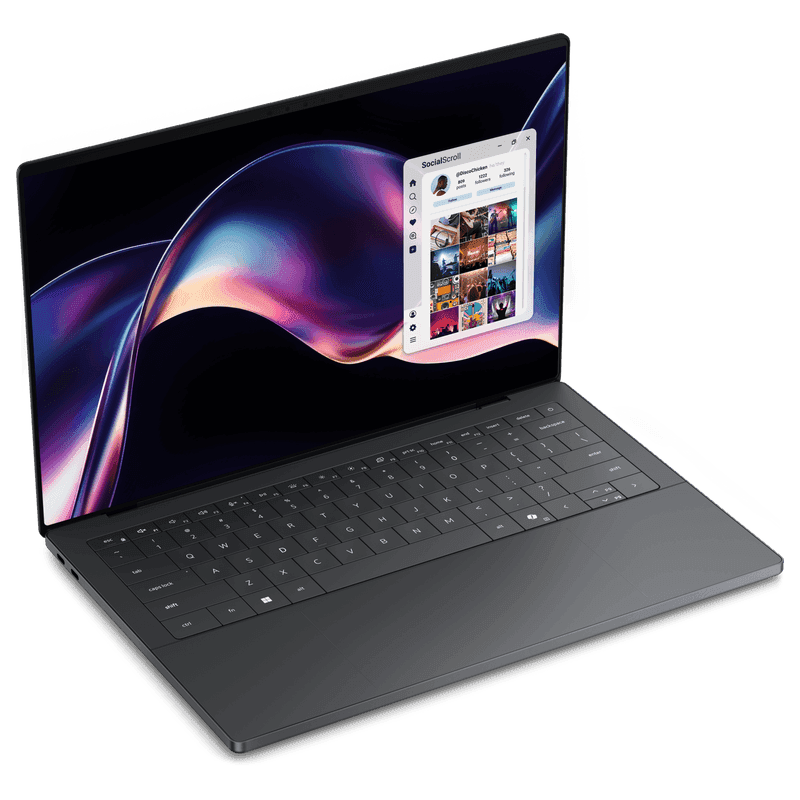
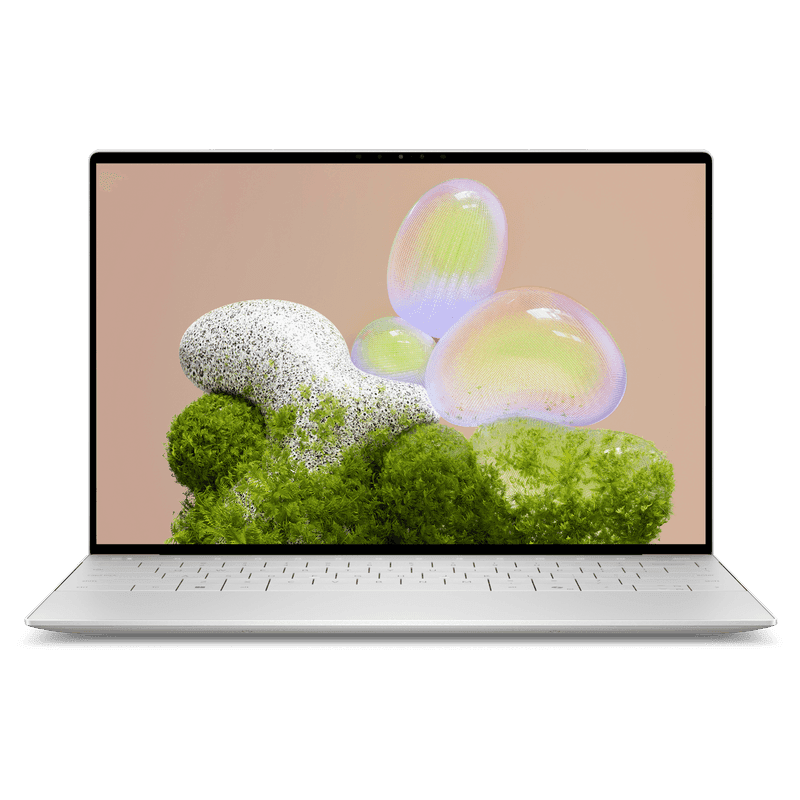
Size and weight
Drawn to the same scale, seen from above. Base configuration.
Price and overview | ||
| Specification | XPS 14 (2026) | XPS 13 (9350) |
|---|---|---|
| Launch Price (India) | No info | No info |
| Announced | January 2026 | September 2024 |
| Operating System | Windows 11 Home / Pro | Windows 11 Home / Pro (Ubuntu 24.04 LTS option) |
| Model Numbers | DA14260 (regulatory model P202G) | XPS 13 9350 (regulatory model P151G) |
Design | ||
| Dimensions | 309.52 x 209.71 x 15.2 mm | 295.3 x 199.1 x 15.3 mm |
| Thickness | 15.2 mm (14.62 mm with OLED) | 15.3 mm (14.8 mm with OLED) |
| Weight | 1.36 kg | 1.18 kg (OLED) / 1.19 kg (FHD+, QHD+) |
| Build | CNC aluminium unibody, Gorilla Glass 3, glass palm rest | Aluminium chassis, glass palm rest |
| Colours | Graphite, Shimmer Gold | Platinum, Graphite |
Display | ||
| Size | 14-inch | 13.4-inch |
| Resolution | 1920 x 1200 (162 ppi) / 2880 x 1800 OLED (243 ppi) | 1920 x 1200 (169 ppi) / 2560 x 1600 (225 ppi) / 2880 x 1800 OLED (254 ppi) |
| Panel | 2K LCD (anti-glare) or 2.8K OLED (anti-reflective, touch) | IPS (FHD+ anti-glare, QHD+ anti-reflective touch) or OLED touch |
| Refresh Rate | 1 to 120 Hz variable (LCD), 20 to 120 Hz VRR (OLED) | Up to 120 Hz (FHD+, QHD+), 60 Hz (OLED) |
| Brightness | 500 nits (LCD), 400 nits typical / 500 nits peak (OLED) | 500 nits (FHD+, QHD+), 400 nits (OLED) |
| Colour Gamut | 100% sRGB (LCD), 100% DCI-P3 (OLED) | 100% sRGB (FHD+), 100% DCI-P3 (QHD+, OLED) |
| Touchscreen | Optional (OLED) | Optional (QHD+ and OLED) |
Performance | ||
| Processor Options | Intel Core Ultra 5 325 / Core Ultra 7 355 / Core Ultra X7 358H / Core Ultra X9 388H | Intel Core Ultra 5 226V / Core Ultra 7 256V / 258V / 268V / Core Ultra 9 288V |
| Top Processor | Intel Core Ultra X9 388H, 16 cores (4P + 8E + 4LPE), 16 threads, up to 5.1 GHz, 18 MB cache | Intel Core Ultra 9 288V, 8 cores (4P + 4LPE), 8 threads, up to 5.1 GHz, 12 MB cache, 30 W |
| Graphics | Intel Graphics (Core Ultra 5 325, 7 355) / Intel Arc B390 (X7 358H, X9 388H), integrated | Intel Arc 130V (Core Ultra 5) / Intel Arc 140V (Core Ultra 7, 9), integrated |
| NPU | Intel AI Boost NPU, 47 to 50 TOPS | Intel AI Boost NPU (up to 48 TOPS on Core Ultra 9 288V) |
| RAM | 16 GB LPDDR5X 7467 MT/s / 32 GB / 64 GB LPDDR5X 9600 MT/s (on board, not upgradeable) | 16 GB / 32 GB LPDDR5x 8533 MT/s (on package, not upgradeable) |
| Storage | 512 GB / 1 TB PCIe Gen4 SSD (M.2 2230), 2 TB / 4 TB PCIe Gen5 SSD (M.2 2280) | 512 GB / 1 TB / 2 TB / 4 TB PCIe Gen4 NVMe SSD (M.2 2230 or 2280) |
Battery and charging | ||
| Battery | 70 Wh (3-cell) | 55 Wh (3-cell) |
| Battery Life | Up to 31 hours streaming (2K LCD), up to 24 hours (OLED), Dell claim | No info |
| Charger | 100W USB-C | 60W USB-C |
Ports and wireless | ||
| Ports | 3 x Thunderbolt 4 (USB4, DisplayPort 2.1, Power Delivery), 3.5 mm headset jack | 2 x Thunderbolt 4 (USB-C, DisplayPort, Power Delivery) |
| Wi-Fi | Wi-Fi 7 (Intel BE211) | Wi-Fi 7 (Intel BE201) |
| Bluetooth | Bluetooth 6.0 | Bluetooth 5.4 |
Extras | ||
| Webcam | 8 MP RGB + IR camera (1440p 30 fps, 4K 30 fps without Studio Effects) | FHD RGB + IR camera (Windows Hello) |
| Audio | Quad speakers (2 woofers + 2 tweeters, 10 W total), dual-array microphones | Quad speakers (2 tweeters + 2 woofers, 2 W each), dual digital-array microphones |
| Keyboard | Backlit zero-lattice keyboard with capacitive touch function row, haptic glass touchpad | Backlit keyboard with capacitive touch function row and Copilot key |
| Security | IR camera (Windows Hello face sign-in), lock slot support through USB-C ports | Fingerprint reader in power button, IR camera, TPM 2.0 |
| Notable Features | Copilot+ PC, ExpressCharge Boost (35% in 20 minutes with 100W adapter), variable refresh down to 1 Hz on LCD | Copilot+ PC, Dell ExpressSign-in 2.0 presence detection, two 4K external displays with lid open |