
Mac mini M6 vs Mac Studio M5 Max
The entry Mac desktop against the workstation.
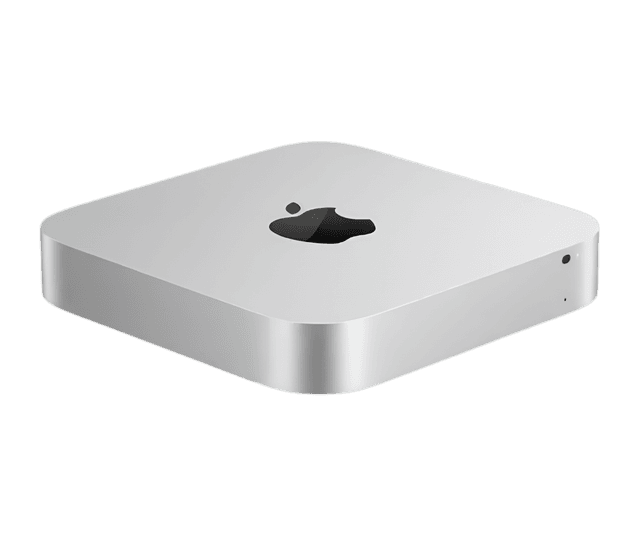
Mac mini (M6)
Thickness: 127 mm
Weight: 670 g
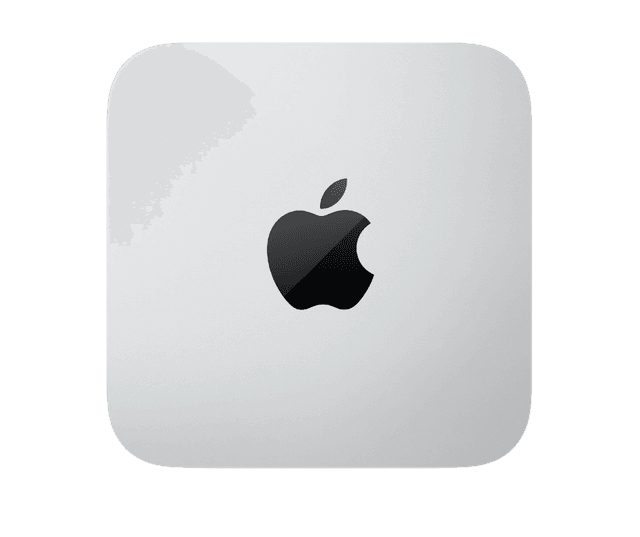
Mac Studio (M5 Max)
Thickness: 197 mm
Weight: 2730 g
General Specifications | ||
| Specification | Mac mini (M6) 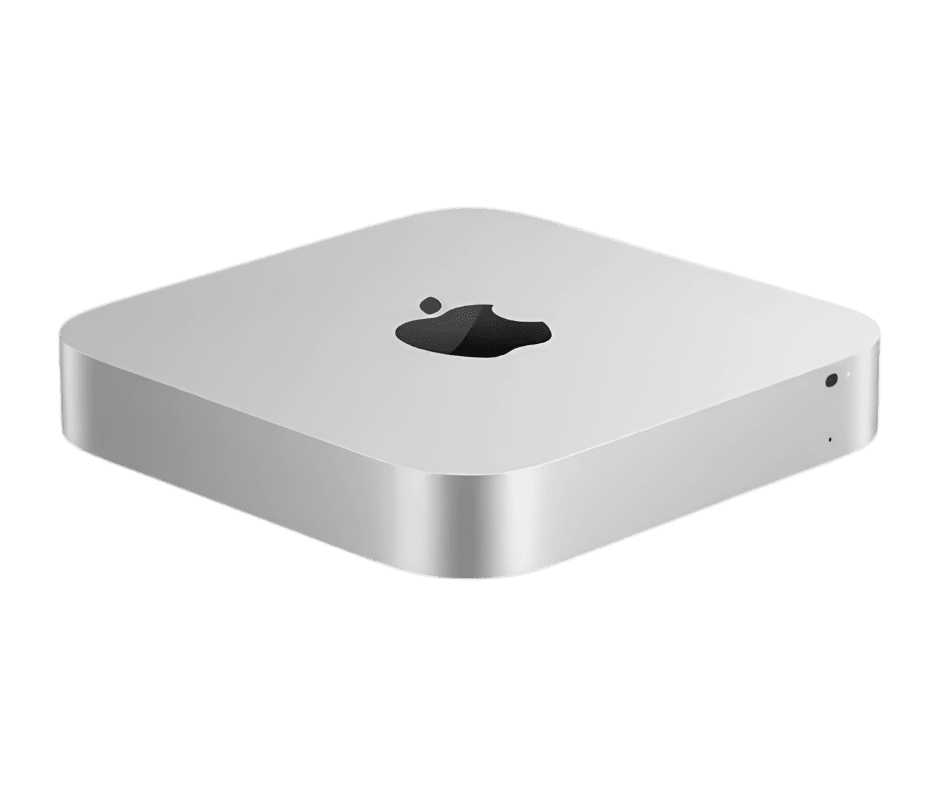 | Mac Studio (M5 Max) 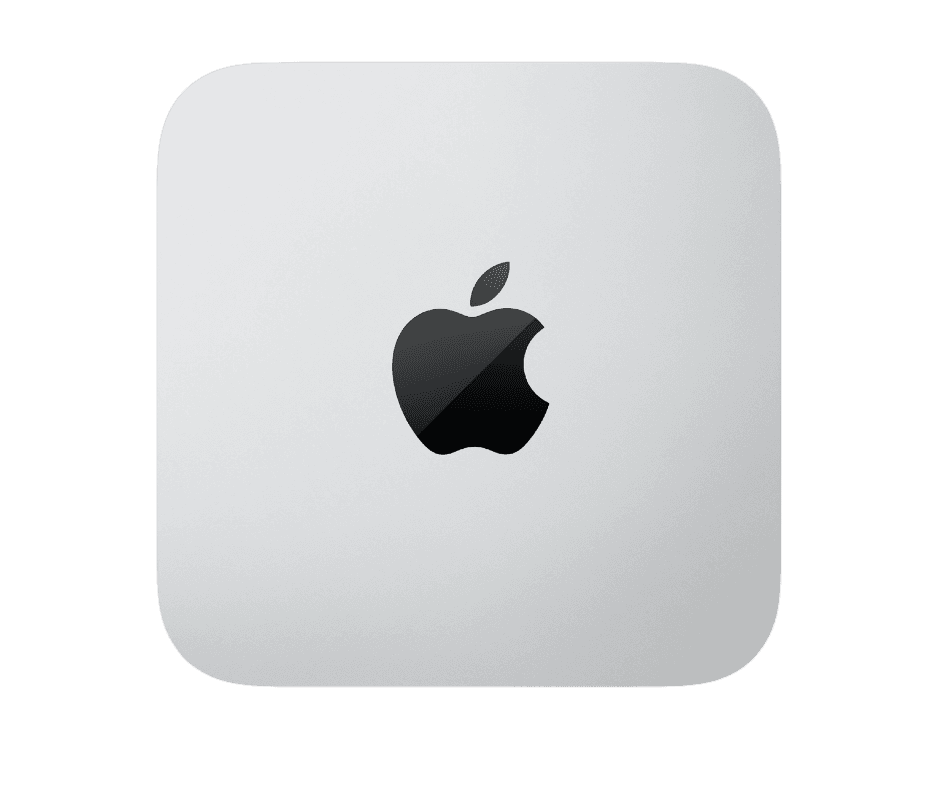 |
|---|---|---|
| Brand | Apple | Apple |
| Model | Mac mini (M6) | Mac Studio (M5 Max) |
| Chip | Apple M6 | Apple M5 Max |
CPU & GPU | ||
| CPU cores | 12-core | 18-core |
| CPU core layout | 2 super + 4 performance + 6 efficiency | 6 super + 12 performance |
| GPU cores | 12-core | 32-core (to 40-core) |
| Neural Engine | Dual 16-core | 16-core |
| Memory bandwidth | 153GB/s | 460GB/s (614GB/s configured) |
Memory & Storage | ||
| Starting memory | 16GB | 36GB |
| Memory options | 16GB, 24GB, 32GB | 36GB to 128GB |
| Starting storage | 256GB SSD | 512GB SSD |
| Storage options | 256GB to 2TB | 512GB to 8TB |
Ports & Connectivity | ||
| Front ports | 2x USB-C (10Gb/s) + 3.5 mm jack | 2x USB-C (10Gb/s) + SDXC slot |
| Thunderbolt | 3x Thunderbolt 4 (40Gb/s) | 4x Thunderbolt 5 (120Gb/s) |
| USB-A | None | 2x USB-A (5Gb/s) |
| SD card | No | SDXC card slot |
| Ethernet | 2.5Gb (10Gb option) | 10Gb Ethernet |
| HDMI | HDMI port | HDMI 2.1 |
| Wi-Fi | Wi-Fi 7 | Wi-Fi 7 |
| Bluetooth | Bluetooth 6 | Bluetooth 6 |
| Thread | Yes | Not stated |
Display Support | ||
| External displays | Up to three external | Up to five external |
| Maximum resolution | 8K at 60Hz, 5K at 120Hz or 4K at 240Hz | Five displays over Thunderbolt and HDMI |
Media Engine | ||
| Hardware acceleration | H.264, HEVC, ProRes, ProRes RAW | H.264, HEVC, ProRes, ProRes RAW |
| Encode engines | Video + ProRes encode and decode | 2x video encode, 2x ProRes engines |
| AV1 | AV1 decode | AV1 decode |
Design & Power | ||
| Height | 4.97 cm | 9.50 cm |
| Width | 12.70 cm | 19.70 cm |
| Depth | 12.70 cm | 19.70 cm |
| Weight | 0.67 kg | 2.73 kg |
| Maximum continuous power | 155W | 480W |
Hardware & Feature Balance
Comparison across CPU and GPU cores, Neural Engine, memory bandwidth, connectivity and footprint
Generational Hardware Gains
Relative on-paper capability, indexed against the stronger chip at 100
Memory Bandwidth
Unified memory bandwidth available to the chip (higher is better)
This is the entry Mac desktop against the workstation, so the question is whether you need the Studio's GPU and I/O at all.
| Target Persona | M6 | M5 Max |
|---|---|---|
The Everyday Desktop User Will not notice the Studio's extra power for browsing, email and documents, and saves a lot of money. | 9.5/ 10 Best Fit | 8.4/ 10 |
The 3D & Video Professional Needs 32 GPU cores, 460GB/s and two ProRes engines that the base chip simply does not have. | 7.2/ 10 | 9.9/ 10 Best Fit |
The On-Device AI Tinkerer The M6's dual 16-core Neural Engine is actually the larger one here, though the Studio has far more memory and bandwidth. | 9.0/ 10 | 9.2/ 10 Best Fit |
The Multi-Display Worker Wants five external displays, which only the Studio supports. | 7.6/ 10 | 9.8/ 10 Best Fit |
The Small-Desk Owner 0.67 kg against 2.73 kg, and a 12.7 cm square footprint against 19.7 cm. | 9.8/ 10 Best Fit | 7.4/ 10 |
Top 10 Core Metrics Analysis
Comparative score breakdown across CPU, GPU, Neural Engine, bandwidth, ports and value
Mac mini (M6)
The cheapest way onto Apple silicon desktop, at 0.67 kg and a 155W ceiling, with a dual 16-core Neural Engine.
Mac Studio (M5 Max)
Nearly three times the GPU cores, three times the memory bandwidth, 10Gb Ethernet, SDXC, USB-A and five-display support.